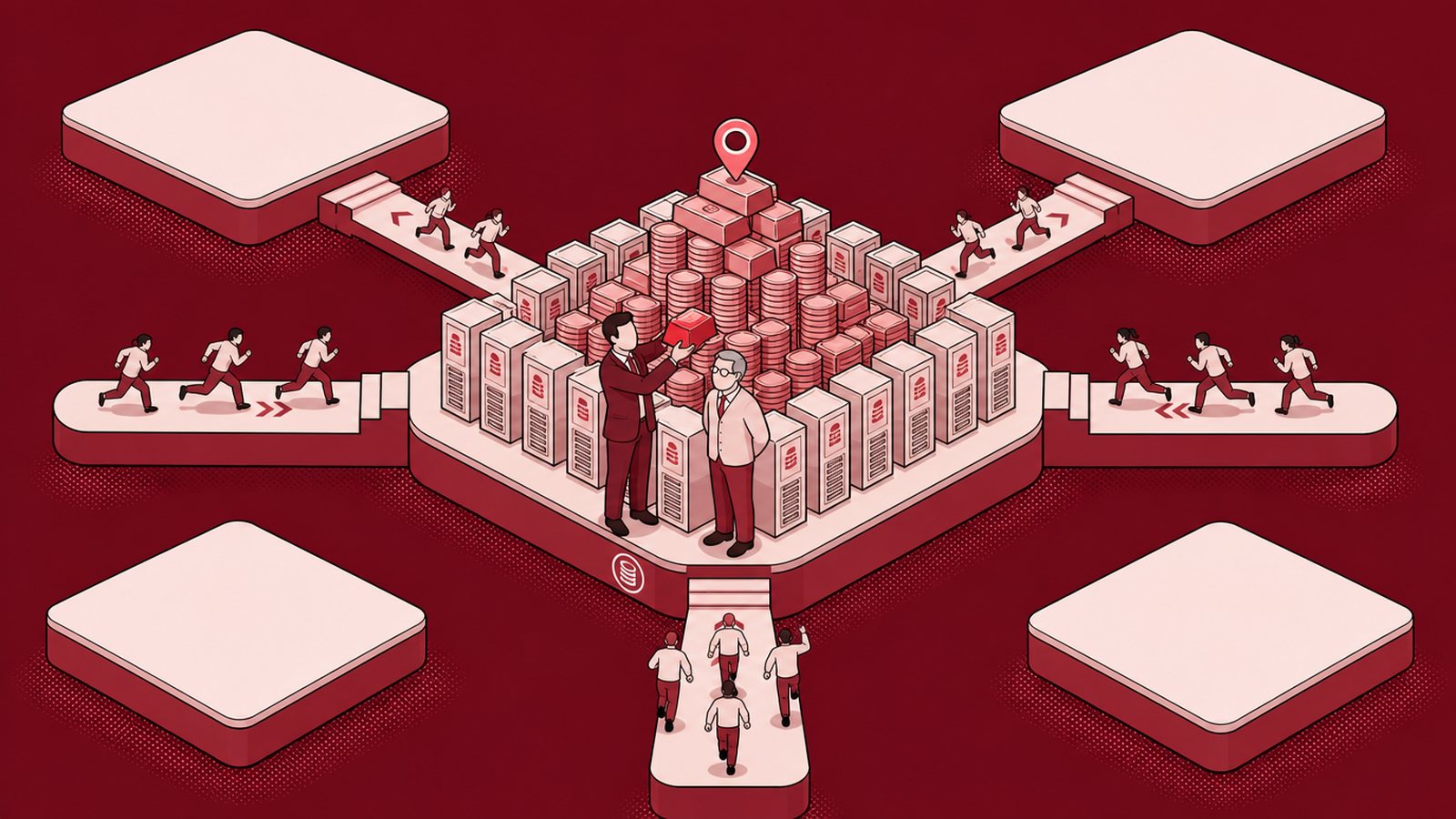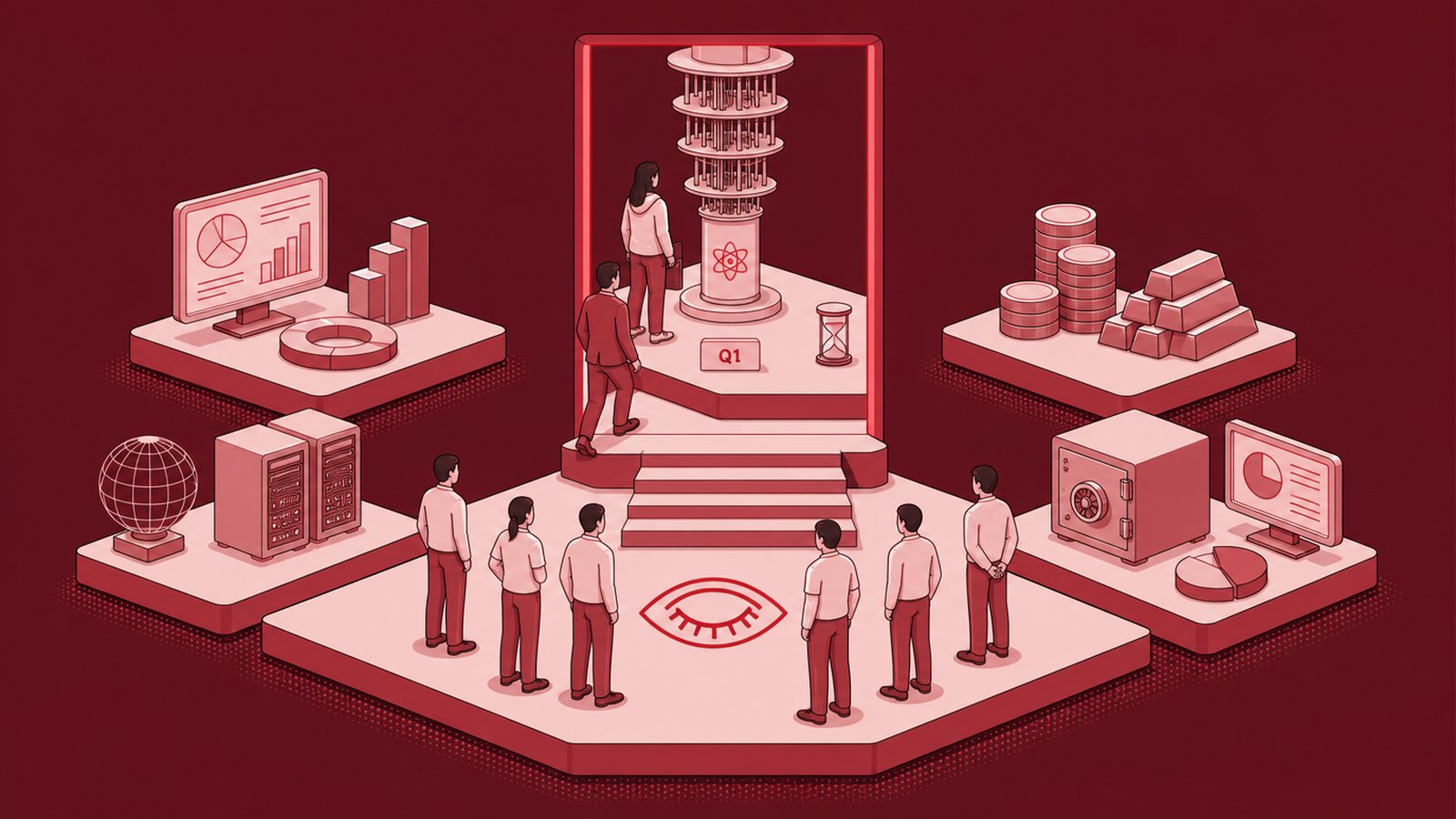
I have spent the better part of my career sitting across the table from people trying to solve the same problem in different costumes: how do you hold wealth in a form that is both safe and usable? A villa in Dubai Hills is safe, but it is not liquid. A stake in a private credit fund can be lucrative, but try selling it on a Tuesday afternoon. Government bonds are about as safe as an asset gets, yet settlement still runs on rails built for a pre-internet world. For most of modern finance, security and liquidity have been in tension. Tokenization is the first technology I have seen in decades that genuinely loosens that trade-off, and the numbers behind it are now too large for any serious investor to wave away.
What Tokenization Actually Means
Strip away the jargon and tokenization is a fairly simple idea: you take legal or economic rights to a real asset, a building, a bond, a private equity stake, a barrel of oil, and represent ownership of that asset as a digital token on a blockchain. The token is not the asset itself; it is a claim on the asset, recorded in a format that can settle in seconds, trade continuously, and be divided into pieces small enough for a retail investor to buy a fraction of a Business Bay apartment instead of needing the full purchase price upfront.
This is not the speculative end of crypto. Tokenization uses blockchain to create tokens for financial and real-world assets ranging from equity, bonds, and funds to art, real estate, and commodities. The asset stays exactly what it was. What changes is the wrapper around it, and that wrapper turns out to matter enormously for how easily wealth can move, divide, and change hands.
The $16 Trillion Number, And Why I Take It Seriously
The figure in this article's title comes from a 2022 report by Boston Consulting Group and ADDX, since reaffirmed in updated BCG work, which projects that tokenized real-world assets could reach roughly $16.1 trillion by 2030, a fifty-fold increase from the $310 billion baseline in 2022. That $16 trillion breaks down roughly into $5 trillion in tokenized real estate, $4 trillion in fixed income and funds, $3 trillion in private equity and venture capital, $2 trillion in commodities, and $2 trillion across art, collectibles, and intellectual property.
I would be doing my readers a disservice if I presented that as consensus. It is not. McKinsey's baseline sits closer to $2 trillion, while Standard Chartered has published a more aggressive $30 trillion forecast by 2034. The World Economic Forum has landed near $10 trillion, and Citigroup's 2023 "Money, Tokens, and Games" report estimated $4 to $5 trillion in tokenized digital securities by 2030. Even BCG itself, in a follow-up analysis with Ripple, has floated a more bullish $18.9 trillion figure by 2033. What strikes me is not which number wins, it is that every credible institutional forecaster, regardless of methodology, sees the same direction of travel: trillions, not billions, within this decade.
The Gap Between the Forecast and Today's Reality
Honest advisory work means I also have to tell you where the market actually stands today, because the gap is significant. Tokenized real-world assets on public blockchains reached roughly $24 billion in total value by February 2026, a 266% increase over the course of 2025. Other trackers put the figure higher still, climbing from about $5.8 billion in early 2025 to more than $30 billion by April 2026, and north of $240 billion once stablecoins are included. Private credit has emerged as the single largest segment, accounting for over half of all tokenized value on-chain today.
So the honest framing is this: we are roughly 0.2% of the way to the BCG base case, six years out from the deadline. That sounds discouraging until you remember that every transformative financial infrastructure shift, ETFs, securitization, even the rise of REITs, looked similarly small in its early innings before compounding hard. The structural builders are not waiting for the forecast to be right before they act; once institutions like BlackRock, Franklin Templeton, and J.P. Morgan committed balance-sheet decisions to tokenization, the category stopped looking experimental.
Dubai's Real-World Laboratory
I do not have to point you to a theoretical case study. I can point you to my own market.
In May 2025, the Dubai Land Department, in partnership with Prypco and infrastructure provider Ctrl Alt, launched the region's first regulated real estate tokenization pilot through the Prypco Mint platform, allowing investors to buy tokenized shares in ready-to-own Dubai properties starting from just AED 2,000, with all transactions conducted in dirhams rather than cryptocurrency. The early results told me everything I needed to know about latent demand. The first listed project attracted 224 investors from 44 nationalities within a single day, 70% of whom were entering Dubai's real estate market for the first time, with an average individual investment of AED 10,714. One villa listing reportedly funded in under two minutes; another drew 326 investors from 51 different countries for a single property.
That pilot has since graduated into something more permanent. On 20 February 2026, DLD activated Phase 2, opening secondary market trading for roughly 7.8 million real estate tokens through the Prypco Mint app, operating around the clock under a framework built jointly with the Virtual Assets Regulatory Authority, the Dubai Future Foundation, and the Central Bank of the UAE. These tokens sit within VARA's Asset-Referenced Virtual Assets, or ARVA, classification, introduced in May 2025 to legally define tokens backed by real-world assets, and are integrated directly into DLD's title deed registry. The Dubai Land Department's own target is for tokenized assets to represent roughly 7% of Dubai's real estate market by 2033, about AED 60 billion, or USD 16 billion.
What I find most telling is where the institutional capital is flowing. Three days before Phase 2 launched, Dubai-based platform Stake closed a $31 million Series B led by Emirates NBD, with participation from Mubadala, Property Finder, and Ellington Properties. When a sovereign-linked investor and a major domestic bank back a tokenization platform in the same week the regulator opens secondary trading, that is not speculative enthusiasm, that is capital following infrastructure it has already underwritten. For context on what this technology is replacing: traditional Dubai property investment typically requires minimum capital of AED 500,000 to AED 2 million or more, plus transaction costs that include a 4% DLD registration fee and agency commissions. Compressing that entry point to AED 2,000 is not a marginal improvement. It is a different asset class for a different kind of investor.
Wall Street's Quiet Pivot Into Tokenized Treasuries
While Dubai has been tokenizing bricks and mortar, Wall Street has been quietly tokenizing the most boring asset on earth, the US Treasury bill, and the results are reshaping institutional crypto strategy. BlackRock's USD Institutional Digital Liquidity Fund, known as BUIDL, launched in March 2024 and has grown rapidly since. By the second quarter of 2026, BUIDL held approximately $2.4 billion in assets under management, making it the largest tokenized US Treasury fund, commanding roughly 34% of that market segment. On 8 May 2026, BlackRock filed with the SEC for two additional tokenized funds, along with onchain shares tied to a $7 billion money-market fund, a signal of expansion, not experimentation.
BlackRock is not alone. Franklin Templeton's OnChain US Government Money Fund, known by its BENJI token, holds approximately $700 million and was an early pioneer in the category, while Ondo Finance has built a strong position bridging tokenized Treasuries into decentralized finance protocols. The broader tokenized Treasury market surpassed $9 billion in late 2025 and is projected to exceed $14 billion in 2026. What I find most significant is the use case: BUIDL has been accepted as collateral on major exchanges and extended across multiple blockchain networks, functioning less like a retail savings product and more like the spine of digital-asset financial plumbing.
The Regulatory Scaffolding Being Built in Real Time
None of this scales without legal certainty, and I have watched that certainty arrive faster than I expected. The 2025 GENIUS Act and the anticipated 2026 Clarity Act have begun supplying the United States with rules of the road that were previously missing. In Europe, the European Commission's December 2025 Market Integration Package proposes bridging MiCA with MiFID II and the DLT Pilot Regime, allowing licensed crypto-asset service providers to operate market infrastructure for tokenized securities for the first time. Switzerland moved earlier than most, with its DLT Act enabling tokenized securities to register and trade on blockchain-based exchanges since 2021. And market infrastructure itself is adapting: the New York Stock Exchange is seeking regulatory approval to build a blockchain-based platform for round-the-clock trading and instant settlement of tokenized stocks and ETFs, potentially launching by the end of 2026.
What This Means for How I Think About Allocation
I want to be direct about the parts of this story that are not yet solved, because an advisor who only shows you the upside is not doing their job. Liquidity remains genuinely thin. Industry research has found pricing gaps of 1 to 3% for identical tokenized assets traded across different blockchains, alongside friction costs of 2 to 5% when moving capital between chains. Most tokenized assets today are held rather than actively traded, and a meaningful shift in that ratio is the clearest signal that the liquidity problem is being solved structurally rather than cosmetically. Legal recognition of token-based ownership also still varies sharply by jurisdiction, and regulators are watching closely: the SEC issued a warning in January 2026 specifically about synthetic tokenized securities that represent underlying assets without the legal rights that come with direct ownership.
So where does that leave a global allocator? In my view, tokenization should be approached the way any serious investor approaches a new market structure, not as a replacement for fundamentals, but as a more efficient wrapper around assets you would want to own anyway. A tokenized Treasury fund is still a Treasury fund; its credit risk has not changed, only its settlement speed and divisibility. A tokenized share of a Dubai apartment is still exposed to that apartment's location, tenant demand, and the broader Dubai real estate cycle; tokenization changes how easily you can enter, exit, and diversify across that exposure, not whether the underlying property is a good investment. The technology amplifies access and liquidity. It does not substitute for due diligence on the asset underneath the token.
The Bottom Line
I think the most useful way to hold the $16 trillion figure in your mind is not as a prediction to bet on, but as a direction of travel that the largest, most risk-averse institutions in global finance have already started building toward. BlackRock, Franklin Templeton, the New York Stock Exchange, and, close to home for me, the Dubai Land Department are not deploying balance sheet and regulatory capital on a whim. They are positioning for a financial system where the line between "illiquid" and "liquid" assets becomes a matter of infrastructure choice rather than asset class. For global wealth holders, that shift will not arrive as a single dramatic headline. It will arrive the way Dubai's pilot did, a villa funded in under two minutes, a waitlist of thousands, and a regulator quietly building the rails underneath it all. The opportunity is real. So is the homework required to participate in it responsibly.