You Are Not Competing With the Machines, and You Should Stop Trying
Let me state the position I have arrived at, and then defend it.
An individual investor attempting to outperform institutional algorithmic systems on speed, breadth of coverage or data processing is engaged in a contest that was settled some years ago. More than 75 percent of United States equity trading volume is now driven by quantitative or algorithmic systems, roughly double the share of a decade ago. Approximately 91 percent of hedge funds report using or planning to use artificial intelligence tools. Over 70 percent of global hedge funds employ machine learning somewhere in their trading pipeline, and around 18 percent rely on AI for more than half of their signal generation.
That contest is over. What is not over, and what almost nobody is discussing with sufficient rigour, is the question of what humans should do instead. Because the same convergence that made algorithms dominant has created a set of structural weaknesses that a patient human investor is unusually well positioned to exploit.
The events of 2026 have made those weaknesses visible in a way that theory never could.
What Happened in 2026, and Why It Matters
I want to walk through this carefully, because it is the most instructive natural experiment the market has offered in years.
In the first ten trading days of January 2026, systematic long short equity managers recorded a drawdown of roughly 2.8 percent, their worst such stretch since the previous October, as crowded United States equity positions unwound simultaneously.
In May, Goldman Sachs documented momentum positioning in AI related equities at the 100th percentile relative to the previous five years, the absolute ceiling of the bank's recorded dataset. On the same day, its high beta momentum basket fell approximately 8 percent, among its sharpest single session losses since 2021.
By mid year, systematic managers had surrendered roughly a quarter of their year to date gains, with returns for the group falling to about 10.8 percent from 14.4 percent earlier in the year. Fundamental stock pickers, supposedly the diversifying opposite of quantitative strategies, declined around 2.2 percent over the same period after being caught in the same crowded technology positions.
Read that final sentence again. The systematic and the discretionary managers lost money in the same trades at the same time. Whatever diversification investors believed they had purchased by allocating across both styles did not exist when it was needed.
The Convergence Mechanism
BlackRock's assessment in April 2026 identified the mechanism precisely, and I think it is the most important idea in contemporary portfolio construction.
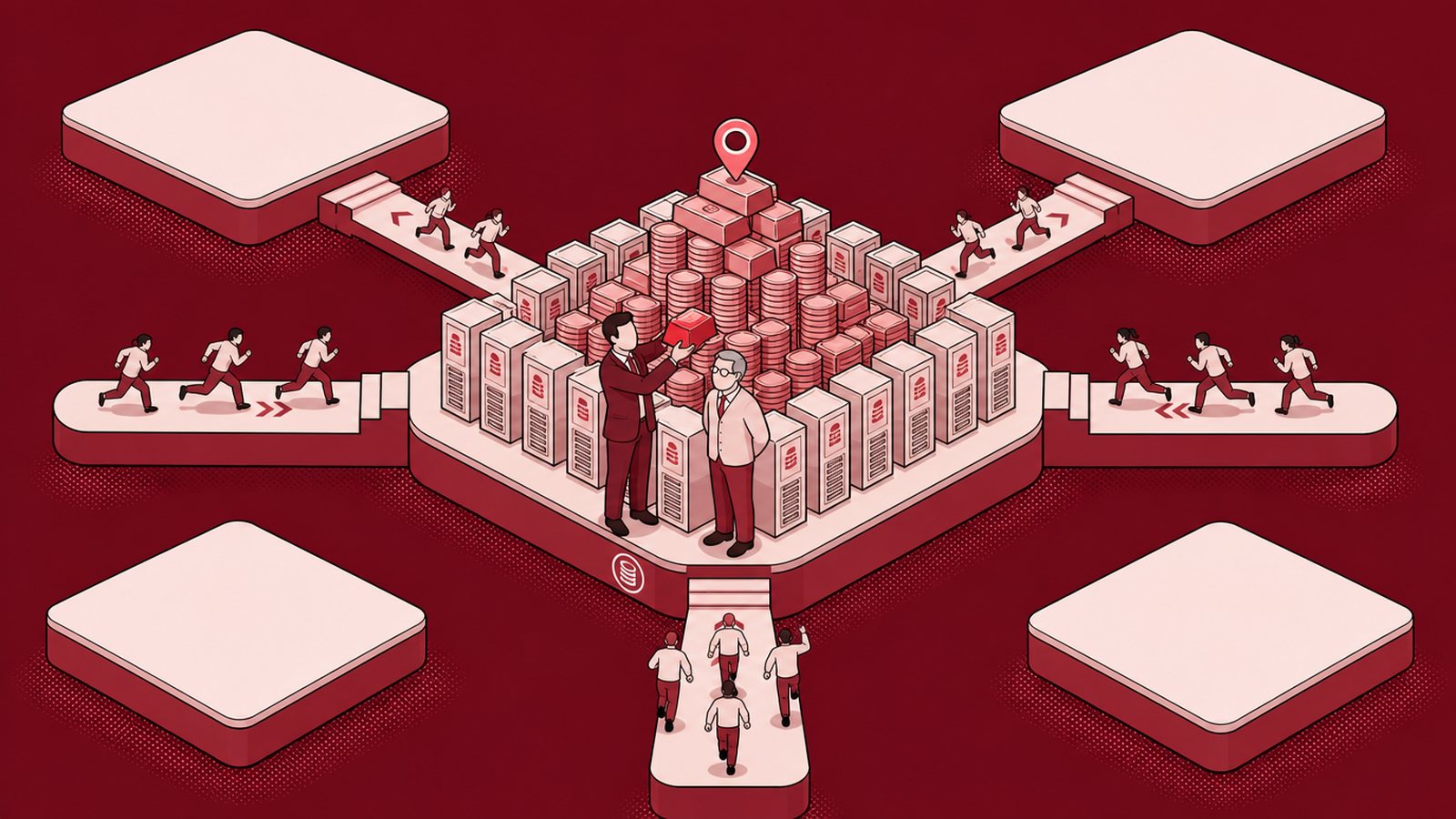
Multi manager platforms, the so called pod shops, are explicitly structured so that independent portfolio managers generate uncorrelated returns. In practice, those independent teams operate under shared infrastructure. They subscribe to the same data vendors. They absorb the same macroeconomic narratives. They employ similar risk models. And so they gravitate, without coordination or intent, toward identical positions.
In calm conditions this is invisible, and the platform genuinely appears diversified. In stress, when liquidity contracts and risk limits trigger simultaneous reductions in gross exposure, what looked like many independent books behaves as a single crowded one. BlackRock described the tail scenario not as gradual underperformance but as a potential violent unwind.
Citadel's quantitative leadership has framed the same paradox from a different angle: artificial intelligence makes information travel faster, and faster information makes trades crowd sooner. The advantage that AI confers is real, and the very act of exercising it destroys it. When every firm runs similar models on similar data, the edge disappears.
This is not a story about bad models. It is a story about correlated inputs producing correlated behaviour, which is a structural property of the system rather than a failure within it.
What Algorithms Genuinely Do Better
I want to be fair before I discuss the weaknesses, because dismissiveness would be as foolish as awe.
Algorithmic systems are demonstrably superior at execution quality, minimising slippage across large orders. They are superior at breadth, monitoring thousands of instruments continuously. They are superior at consistency, applying a rule identically at the four hundredth instance as at the first. And they are superior at processing unstructured data at scale: earnings transcripts, filings, sentiment, satellite imagery, transaction data.
They are also superior at not being frightened, which is not a small thing. Regulators including the Bank of England, the Bank of Japan and the Bank for International Settlements have repeatedly cautioned about elevated valuations and hedge fund activity contributing to volatility, but no algorithm has ever sold at the bottom because it could not sleep.
Where They Remain Structurally Weak
Regime change. Models are trained on history. When the underlying regime shifts, and the relationship between variables changes rather than merely their values, historical training becomes a liability rather than an asset. Every model is, in a precise sense, a bet that the future rhymes with the sample.
Reflexivity. When enough capital follows similar signals, the signals begin to move the market rather than describe it. The August 2024 Nikkei episode, a 12.4 percent single day decline triggered by a modest rate adjustment, illustrates how correlated algorithmic response converts small shocks into large dislocations. So, more absurdly, does a 67 percent after hours move in a listed equity caused by a typographical error in a filing.
Novelty. A genuinely unprecedented event has no training data. Human judgement, for all its documented biases, can reason analogically about situations it has never encountered.
The crowding paradox. This is the decisive one. An algorithmic edge, once identified, attracts capital. Capital erodes the edge and simultaneously builds the crowd. The strategy becomes progressively less profitable and progressively more fragile at the same time.
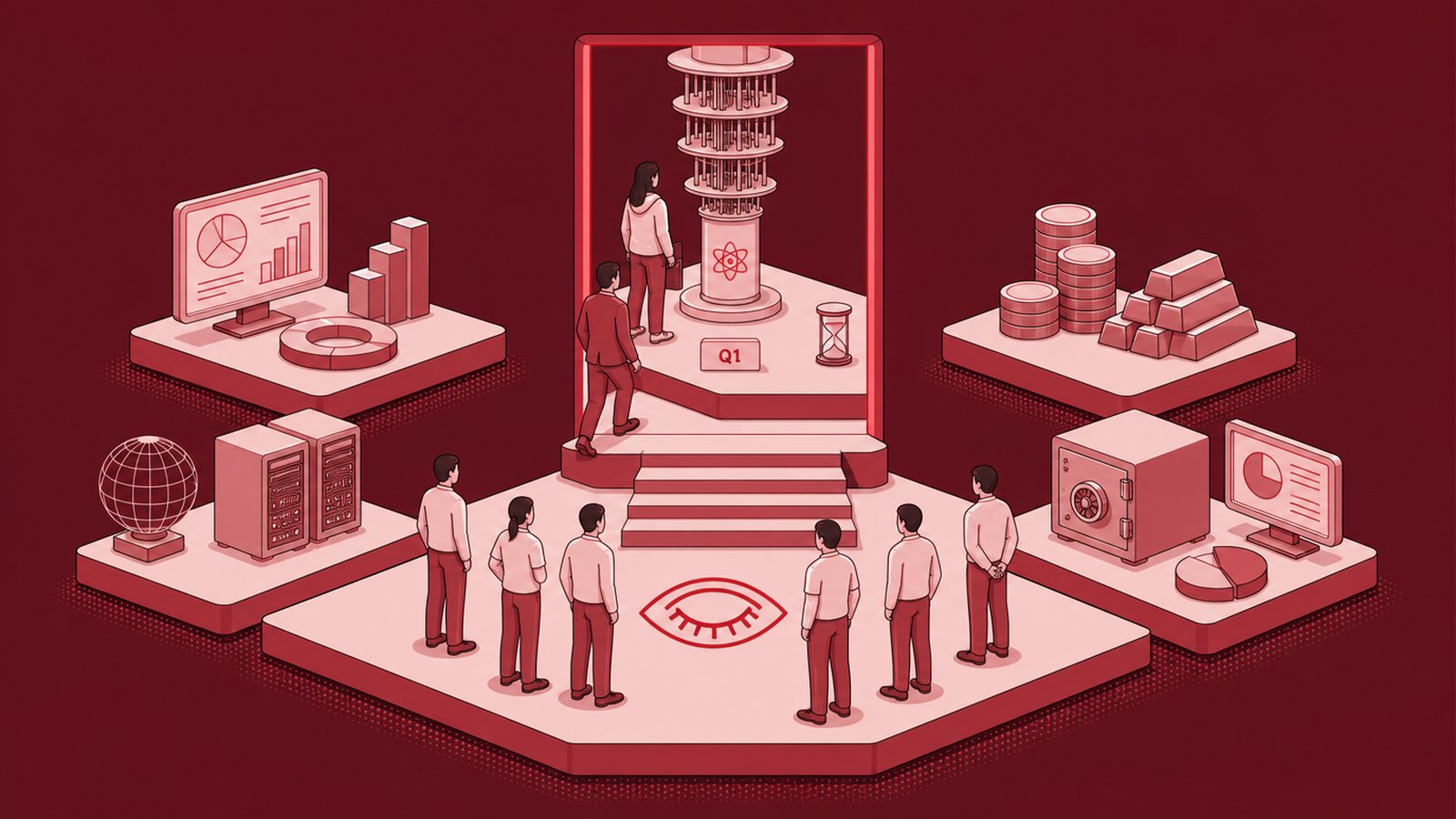
The Four Advantages a Human Investor Actually Holds
Having established what cannot be won, let me be specific about what can.
Time horizon arbitrage. Institutional systems operate under monthly reporting, quarterly redemption windows and daily risk limits. They are structurally compelled to reduce exposure into weakness. A private investor with no redemption pressure can hold through a violent unwind, and can buy into it. This is not a psychological advantage. It is a structural one, and it is the most valuable asset most individual investors possess without realising it.
Illiquidity tolerance. Systematic strategies require liquid, tradeable instruments with clean data histories. Enormous categories of return, private infrastructure, direct real estate, private credit, frontier market assets, are simply outside their universe. Not because they are unattractive, but because they cannot be modelled or exited quickly.
Judgement under novelty. Assessing a regulatory shift, a geopolitical realignment or a change in the character of a management team is qualitative work. It resists quantification, which is exactly why it remains available.
Permission to do nothing. An algorithm must act within its parameters. A human may wait indefinitely without explaining the decision to anyone. In a market where crowding is the dominant risk, the capacity to abstain is genuinely valuable.
Five Things I Now Do Differently
I measure crowding alongside valuation. Positioning data, momentum percentile readings and prime brokerage commentary have become standing inputs in my process. An attractively valued asset held at extreme positioning is not a safe asset; it is a compressed spring.
I treat correlation as time varying rather than fixed. Correlation assumptions drawn from calm periods systematically understate risk. I assume that in a stress event, correlations across everything except cash and high quality government debt converge toward one, and I construct accordingly.
I lengthen holding periods deliberately. If the primary human advantage is time horizon, then trading frequently is the surrender of the only structural edge available. I have become considerably slower on purpose.
I pre commit to rules before stress arrives. Unwinds now happen in hours rather than weeks. There is no time to deliberate mid event, so the deliberation must happen beforehand: what will I buy, at what level, funded from where.
I hold liquidity as an option rather than as a residual. Cash in an algorithmically crowded market is not idle capital awaiting deployment. It is a purchased option on someone else's forced selling, and forced selling has become both more frequent and more violent.
A Warning About Retail AI Agents
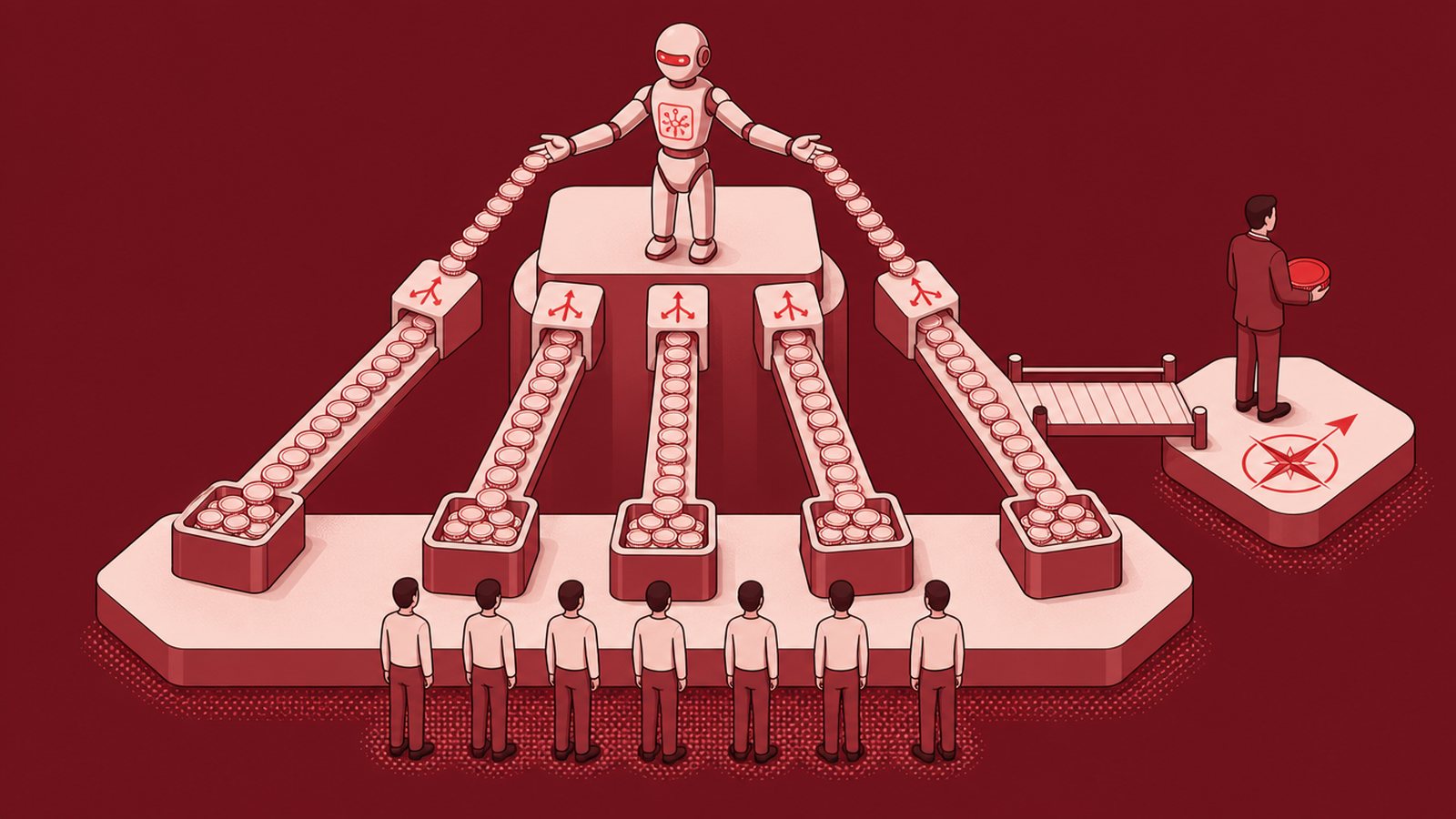
Personalised AI portfolio agents that set allocations, rebalance, harvest tax losses and hedge tail risk have expanded rapidly among individual investors during 2026.
I have no objection to the tools. I have a serious objection to a particular use of them. If a large number of retail investors deploy agents built on similar foundation models, trained on similar data, applying similar risk frameworks, then retail capital will crowd in exactly the way institutional capital has crowded. The mechanism is identical. Only the participants differ.
More fundamentally: outsourcing execution is efficiency. Outsourcing judgement is abdication. The moment an investor can no longer explain why they hold what they hold, they have lost the ability to hold it through a drawdown, which was the one advantage they had.
The Regulatory Question Nobody Has Answered
There is a supervisory problem developing here that I believe will define financial regulation for the next decade, and investors should understand it because its resolution will affect market structure directly.
Existing regulation is built around identifiable intent. It asks who decided, what they knew, and whether they acted improperly. That framework functions when a human makes a decision and leaves a record of reasoning.
It functions considerably less well when a deep learning system produces an allocation that no individual can fully explain, when thousands of such systems converge on the same position without communicating, and when the resulting market impact is indistinguishable in effect from coordinated behaviour but arises without coordination in any legal sense.
Central banks and international bodies have identified AI driven convergence as an emerging systemic concern. Identifying it is not the same as being equipped to supervise it. Supervisors currently lack both the visibility into private model behaviour and the legal vocabulary to describe an outcome that is systemically harmful yet individually blameless.
I raise this not to predict a particular policy response but to flag a portfolio consequence. Regulatory intervention in this area, when it arrives, is likely to arrive suddenly and after an incident rather than gradually and in anticipation of one. Strategies whose returns depend on high leverage, high turnover and rapid position adjustment carry a policy risk that does not appear in their historical volatility. That is a risk worth pricing before it is priced for you.
Closing Thought
The most useful mental model I have found is this. The machines have taken the tactical layer. The strategic layer is still ours.
Price discovery over minutes and days now belongs to systems that are faster and more consistent than any person. But the questions that determine long term outcomes, which structural changes are real, which risks are genuinely uncorrelated, what a family is trying to achieve across decades, how much volatility a particular life can absorb, remain human questions. They are not being answered by algorithms because they cannot be posed to them.
The investors who struggle in this market will be those who try to compete on the machines' terms. The investors who do well will be those who understand precisely what the machines cannot do, and then arrange their affairs so that patience, judgement and the absence of forced selling become the assets they trade on.
That has always been the durable edge. It is simply that the competition has now made it explicit.
Sources and further reading (9)
- Crowded AI trades trigger losses for hedge funds, Reuters via Yahoo Finance
- AI trading crowding erases quant edge 2026, BlackRock and Goldman Sachs analysis, Pomegra
- Citadel’s quant chief on AI’s market paradox, faster information and crowded trades, HedgeCo
- Quant and systematic strategies stay in high demand, HedgeCo
- Artificial intelligence and systemic risk, performative prediction and algorithmic herding, arXiv
- AI investment strategies 2026, trading and portfolio management, Intellectia
- The rise of AI-first hedge funds, what investors should watch in 2026, HedgeThink
- AI trading agents in 2026, the complete guide to autonomous investing, AssetWhisper
- Is AI trading the new frontier or just hype, Kavout